Journal Cover / ACS Infectious Diseases / December 12, 2025 Volume 11, Issue 12
https://pubs.acs.org/toc/aidcbc/11/12
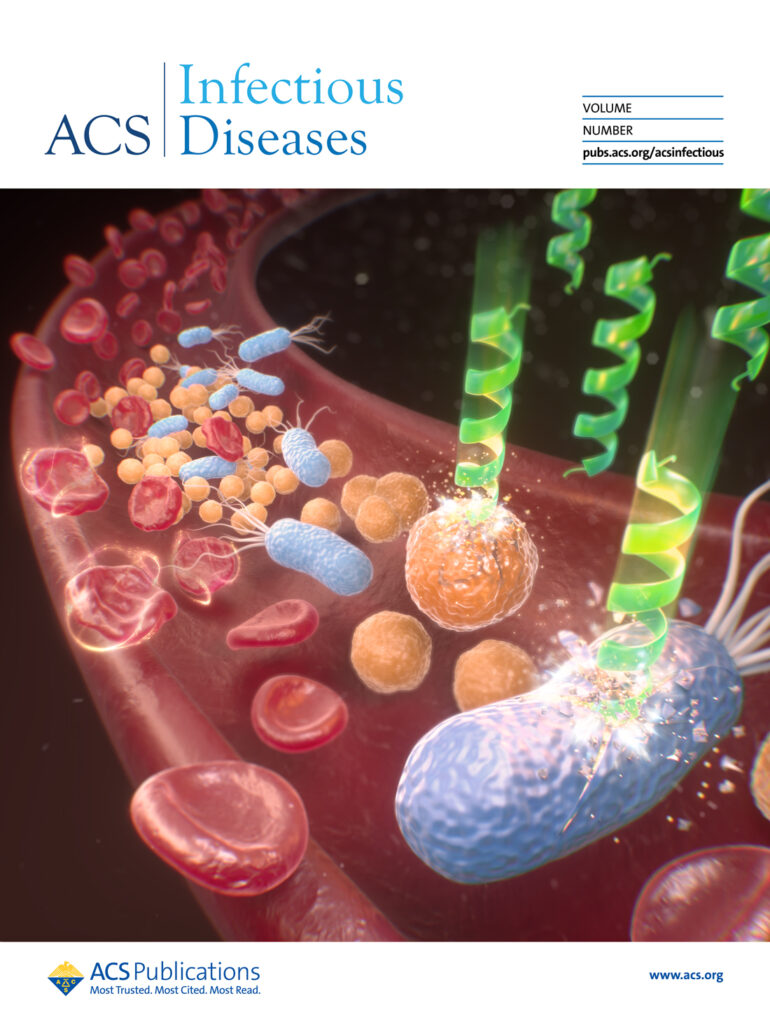
Pse-T2-Based Short Peptides with Broad-Spectrum Antimicrobial Activity, Stability, and Safety Combat MDR Staphylococcus aureus In Vitro and in Mouse Infection Model
Infections caused by MDR pathogens are on the rise worldwide, and relying on conventional antibiotics can be life-threatening for patients. To address this issue, we used a functional truncated peptide, Pse-T2-C12, which exhibited excellent antibacterial, antibiofilm, and antipersister activities, along with a rapid killing rate against all tested pathogens. Pse-T2-C12 kills bacterial cells via pore formation, permeabilization, and disruption of bacterial membranes. Pse-T2-C12 did not induce resistance development, remained stable over pH, temperature, and serum conditions, and showed no detectable toxicity in vitro and in vivo. Moreover, in vivo data showed that Pse-T2-C12 reduced MDR Staphylococcus aureus infection, resulting in a reduced inflammatory response, decreased coagulation, and pain reduction. These findings highlight Pse-T2-C12 as a promising antibiotic candidate owing to its easy synthesis, economic benefits, and ability to treat MDR bacterial infections.